 March 9, 2026
TraCCC becomes CONTRA: The first center to examine transnational crime and corruption adds criminal networks to its mandate and changes its name.
 March 6, 2026
If you're looking to head to the tidal basin for peak cherry blossoms, your lucky day might be April 2.
 March 3, 2026
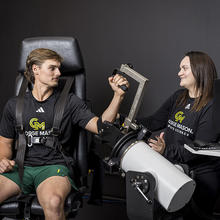
The Patriot Performance Lab keeps George Mason athletes in top form through evidence-based practices, science, and a strong partnership between Athletics and CEHD.
 March 3, 2026
In January, George Mason University senior Angela Victoria Rojas Rivera represented the university at the National Collegiate Research Conference (NCRC). Led and hosted by Harvard University, NCRC is the largest student-run research conference in the United States. Only 200 students are selected to attend.
 February 26, 2026
With funding from the National Institute on Aging, George Mason health economist Jeah Jung will evaluate how Medicare Advantage’s new non-medical benefits like food and transportation impact health care use and patient outcomes.
 February 25, 2026
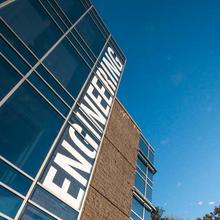
George Mason University has become Virginia’s first R1 research institution to commercialize a product under the state’s new Lab-to-Launch initiative, marking an early milestone in the commonwealth’s push to accelerate university research into the market.
 February 25, 2026
Researchers led by a team from the Schar School analyzed decades’ worth of data to draw a map of the world’s biggest buyers and sellers of illicit kidneys. See what nations perpetrate this international crime.
 February 24, 2026
When a manufacturing machine is cutting, drilling, or shaping metal, it is following a precise set of digital instructions, with every motor turn intentional. But what happens when there’s a subtle change along the way?
 February 19, 2026
Benjamin Cash, research professor in George Mason University’s Department of Atmospheric, Oceanic and Earth Sciences, is leading a $1 million project funded by National Oceanic and Atmospheric Administration (NOAA) to improve seasonal precipitation forecasts in Virginia.
 February 18, 2026
Board Certified Sports Dietitian Allison McKay discusses the importance of nutrition in training and recovery of elite athletes.