
Strengthening Peace, Trust, and Engagement in Democracy
Strengthening peace, trust, and engagement in democracy is vital for creating resilient, inclusive societies where individuals feel empowered to shape their future. George Mason is building civic trust and advancing peace by preparing students to lead, supporting global collaboration, and fostering community resilience. Working with faculty and experts on real-world policy solutions, George Mason equips the next generation to contribute meaningfully to democratic resilience at home and abroad.
Grand Challenge Initiative
George Mason’s Grand Challenge Initiative is a university-wide collaboration addressing humanity’s most pressing challenges through six interlocking strategies, supported by a $15 million investment over five years.
On this page
THE GEORGE MASON ADVANTAGE
George Mason chairs the United Nations SDG 16 Hub—Peace, Justice, and Strong Institutions, a position it will hold for the next three years. As hub chair, the Carter School for Peace and Conflict Resolution is responsible for education and training, research, community engagement, developing partnerships, and working with other SDG hubs to strengthen and further the United Nations’ mission of peace and justice.
Read: The Carter School named a United Nations Academic Impact Sustainable Development Goal Hub Chair

RESEARCH IN ACTION
Carter School focuses on Baltimore peace education and violence prevention

Arthur Romano is working to prevent gun violence in the city through proactive peacebuilding initiatives. The Baltimore Peace Education and Violence Prevention project, part of a collaboration between the Carter School and Rotary International, is addressing the problem with a multipronged approach: Peace summits that bring together peacebuilding organizations in Baltimore, offering services to municipal governments to strengthen their strategic plans in that area, and an international exchange of violence prevention practitioners to share emerging practices.
“Since community-based violence is a result of multiple compounding stressors and structural issues, then the interventions need to be multi-level,” said Romano, an associate professor at the at the Jimmy and Rosalynn Carter School for Peace and Conflict Resolution and founder of the Carter School’s Program on Urban Peacebuilding. “We’re trying to be proactive and build infrastructure that accelerates learning and communication across organizations.”
The research team held a pilot peace summit in Baltimore in April 2025 that brought together practitioners and community organizations on the front lines of violence prevention to share knowledge, identify gaps, and identify areas for collaboration.
A key partner in the project is Carter School alum Nawal Rajeh, who organized the peace summit and has been running a peace camp in Baltimore for the past 17 years for children most at-risk for gun violence through her nonprofit By Peaceful Means.
Satellite imagery could aid in seeking justice for human rights violations in Sudan
Daniel Rothbart has for many years investigated the plight of civilians in war globally. He believes that out of the 59 protracted violent conflicts around the world, the civil war in Sudan is among the most horrific.
“This conflict has had catastrophic humanitarian implications,” explained Rothbart, the Druscilla French Chair in Conflict Analysis and Resolution in the Carter School of Conflict Analysis and Resolution. “There have been an estimated 16,000 fatalities and numerous cities destroyed. Right now, Sudan has the largest number of internally displaced persons in the world at 10.7 million people.”
As peace talks failed and conflict escalated, the Conflict Observatory, managed by the MITRE Corp and funded by the U.S. Department of State’s Bureau of Conflict and Stabilization operations, approached Rothbart and the Carter School to support an investigation into the human rights violations associated with the civil war.

In areas of violent conflict, scholars like Rothbart must find remote methods of data collection. One such method is through Open Source Investigations (OSINT), where publicly and commercially available information, such as satellite imagery, social media posts, and news reports, is collected and analyzed.
Because the Conflict Observatory specifically requested satellite imagery evidence, Rothbart enlisted a team of researchers from the College of Science’s Department of Geography and Geoinformation Science, including department chair Dieter Pfoser, to gather and analyze the images. Through this method, they can show side-by-side images of the large-scale destruction of civilian areas over the course of the conflict, such as markets, neighborhoods, and health care facilities.
STUDENT RESOURCES
Mason Lobbies
Mason Lobbies is an annual event in which Student Government brings students down to the state capital in Richmond to lobby state legislators for legislative items that impact the university and its students. This is a way for the George Mason student body to emphasize their concerns and use their voice to make our university better for all.
Democracy Lab
In partnership with George Mason's Housing and Residence Life, the Schar School's Democracy Lab is a learning experience open to all first-year undergraduates living on campus. Through the learning community, students engage with the issues that define the journey of democracy in the United States and around the world.
Dialogue and Difference Project
The Dialogue and Difference Project aims to promote cultural, political, and social understanding through the process of community dialogue participation.
International Relations Policy Task Force
The International Relations Policy Task Force invites Schar School sophomore-, junior-, and senior-year students to engage deeply with pressing global challenges. Over the course of a year, students will pursue individual research on a topic of interest, network with subject area experts, and work collaboratively to propose policy solutions.
Jurisprudence Learning Community
For students interested in law and related careers, the Jurisprudence Learning Community offers a law school-like experience for undergraduates. Students don’t just read about the law, they simulate jury selections, analyze real Supreme Court cases, and meet judges and prosecutors.
FACULTY SPOTLIGHTS
George Mason faculty are tackling the most urgent questions of democratic resilience—from the anatomy of disinformation to the psychology of polarization. Faculty researchers collaborate across communication, policy, psychology, and data science to explore how democratic trust is built, broken, and restored.

Schar School professor Jennifer Victor studies the U.S. Congress, legislative organization and behavior, social network methods, political parties, campaign finance, organized interest groups, and lobbying. She also runs the Politics Research Lab, undergraduates and graduate students conduct research and publish on topics such as voter turnout and legislative behavior.

Over the decades, Marc Gopin, the James H. Laue Professor of World Religions, Diplomacy, and Conflict Resolution and director of the Center for World Religions, Diplomacy and Conflict Resolution has pioneered peacebuilding work and trained thousands of students in conflict healing and peacebuilding through intensive practice courses in conflict zones around the world.
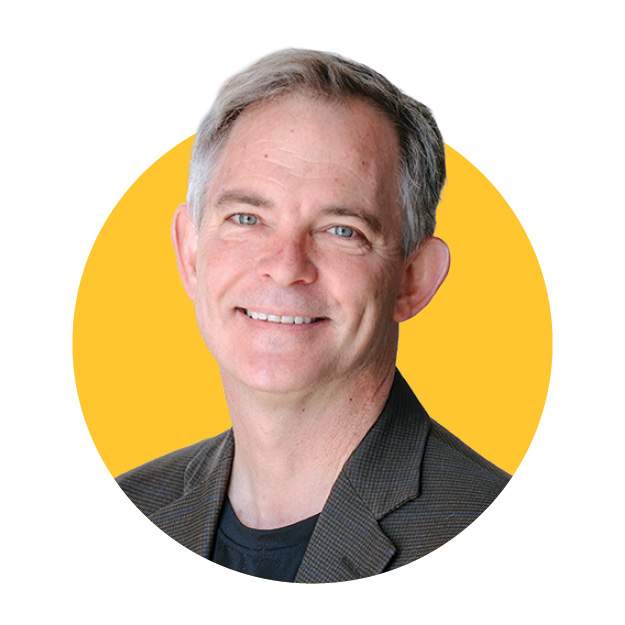
At the Carter School’s Narrative Transformation Lab, Solon Simmons is leading efforts to develop cutting-edge narrative tools for use in practical applications in both adversarial struggles for justice and collaborative journeys toward peace.

Guadalupe Correa-Cabrera is a frequent commentator on issues related to Mexican politics, U.S.-Mexico (border) relations, immigration, drug trafficking, and other forms of transnational organized crime. She was recently a Fulbright Scholar in Mexico, conducting research on human smuggling and transnational crime networks for a book.

PARTNERSHIPS AND COMMUNITY ENGAGEMENT
Rotary-Carter School Collaboration for Peace
The Carter School has partnered with Rotary International, one of the largest global membership service organizations, to provide education and develop modalities to assist Rotary clubs in promoting local, regional, and global peace.
United Nations
The Jimmy and Rosalynn Carter School for Peace and Conflict Resolution was named a United Nations Academic Impact Sustainable Development Goal Hub Chair for (SDG) 16: Peace, Justice and Strong Institutions.
FUTURE-READY INFRASTRUCTURE
Peace Labs
The Carter School Peace Labs identify, test, and enhance existing practices, tools, and models of peacebuilding and reconciliation, assessing their potential and advancing their applications across different social contexts.
Point of View International Retreat and Research Center
Set on 120 acres of pristine wooded land in Lorton, Virginia, Point of View International Retreat and Research Center is dedicated to peacebuilding practice, teaching, and research.
Clinic for Legal Assistance to Servicemembers and Veterans (M-VETS)
Founded in 2004, the Clinic for Legal Assistance to Servicemembers and Veterans, called M-VETS, enables Scalia Law students to assist servicemembers, veterans, and dependent family members in a wide variety of litigation and nonlitigation matters. Since its inception, students have assisted hundreds of clients from all five branches of the armed services.
PODCASTS
Peacebuilding amid the rise of global conflict
On this episode of Access to Excellence, President Gregory Washington is joined by Marc Gopin, the James H. Laue Professor of World Religions, Diplomacy and Conflict Resolution in George Mason’s Jimmy and Rosalynn Carter School for Peace and Conflict Resolution, to discuss the art of diplomacy by building one relationship at a time and creating a shared vision of peace.
The economic perceptions driving U.S. politics
On this riveting episode of Access to Excellence, President Washington is joined by two experts on the political process—Jeremy Mayer and Jennifer Victor, associate professors of political science in the Schar School—to discuss the impacts of polls, economic perceptions, and more on the 2024 presidential election.
NEWS
- February 23, 2026
- January 15, 2026
- November 19, 2025
- November 3, 2025
- October 29, 2025
EVENTS
Peace Week
In Fall 2020, the Carter School launched a new tradition to bring together the George Mason community and the broader public in dialogue about peace, conflict resolution, and justice with a week of speakers, activities, and events in the spring and fall semesters.
Carter School Spring 2026 Peach Week, April 11, 8 a.m.
Mason Votes
Part of George Mason’s Student Media, Mason Votes is a nonpartisan political news website that provides a space for students to learn about the issues and candidates while engaging in dialogue about how to address the challenges facing America and the world.