In This Story
George Mason University recently held its first-ever Qualitative Research Day, an event for PhD students of all disciplines to engage in hands-on and interactive opportunities with the goal of learning new qualitative research techniques and methodologies. The inaugural event is the latest innovation in George Mason's ongoing efforts to find new ways to support its PhD students.
The event was a collaboration between faculty and students from the College of Public Health, the College of Education and Human Development (CEHD), and the Carter School for Peace and Conflict Resolution, including Supriya Baily from Carter School, Erin Maughan from the School of Nursing, Bethany Letiecq from CEHD, PhD students Karthik Ramanujam and Tara Altay, and Fenwick Library team members, including Debby Kermer and Ramanujam.
The team received funding from each of the colleges as well as the Graduate Nursing Organization and the Graduate Division.
Baily, who served as president of the Comparative and International Education Society, an academic association comprising more than 3,500 researchers, analysts, practitioners, and students, used her connections to bring national research experts to the event to deliver keynotes, lead workshops, and guide students through data analysis activities. Students were able to refine their qualitative research skills and network with professional qualitative researchers from across the globe.
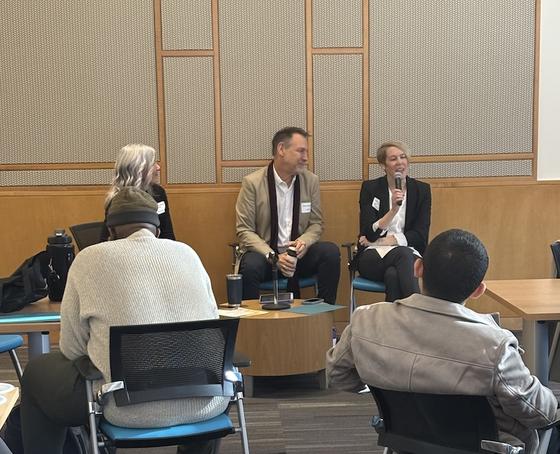
"We did this purely because we thought the students needed it. We were determined that this was going to be a hands-on and interactive event to ensure that the students left having learned something new," said Baily, who was previously co-director of the Center for International Education.
"I was very grateful they were willing to come here and share their expertise with the students," Baily said of the guest speakers.
"PhD students need to enhance their skills in this area—be more rigorous, professional, figure out how it's valued—and look at the new methodologies of doing it," she said.
Maughan teaches NURS 920 Qualitative Research in Nursing and Health Care in the School of Nursing where she met students who were passionate about qualitative research, including Altay, her advisee and doctoral nursing student.
"I was helping Tara navigate the resources on campus, and that's when we realized that there's actually a bit of a gap in resources for qualitative research compared to that for quantitative research, which tends to be the more traditional research for many [PhD candidates]," said Maughan.
The team made sure the events really resonated with the students by identifying where they wanted more information. The biggest area of interest for PhD students focusing on qualitative research was analysis.

Guest speaker Jeffrey Lee, former professor of education at University of Massachusetts Global, guided students through best practices in data coding, data analysis, and theme development. His workshop helped students build expertise by framing the complexity of data analysis in an accessible and scaffolded approach.
Lee also categorized reviews from the recent Bruce Springsteen biopic Deliver Me from Nowhere to demonstrate the process for qualitative analysis of audience reception.
Altay, who is working on a PhD in nursing and earned a Qualitative Research Certificate, worked with Maughan and Baily to help make Qualitative Research Day happen.
"To my knowledge, it's rare for students in the School of Nursing to do a full qualitative dissertation, but the nursing faculty have been super supportive of my doing a full qualitative dissertation, which is such a huge thing," said Altay, whose research focuses on the stigma sex workers face with health care providers.
"It's all about students' professional development so they can be the best versions of themselves when they go off and get jobs as researchers and scholars," said Baily. "As the next generation of academics, they'll be able to say 'George Mason trained me well.'"