- Mason students and faculty help guide school security by participating in active shooter simulationsLast August, George Mason University faculty and students participated in a series of virtual simulations of school shooter incidents as part of an effort to help the Department of Homeland Security (DHS) and MITRE Corp. determine best practices for school safety.
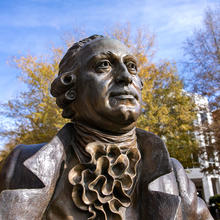 Retired Army Lt. Col. Alexander Vindman discusses ethical dilemmas in pulic service
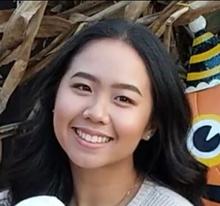 This spring, Mason senior Elizabeth Cheang landed an internship that provided her with a unique opportunity to research COVID-19 cases and use public data sets to discover virus hot spots in the Washington, D.C., metropolitan area.
-
George Mason University has begun administering COVID-19 vaccinations to students.
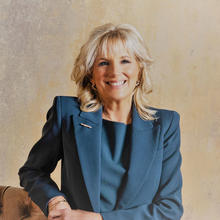 First Lady Jill Biden will be George Mason University’s Commencement speaker next month, headlining the May 14 virtual event honoring nearly 9,700 graduates.
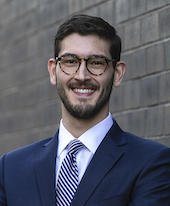 Playing football for University of Notre Dame was something Steve Elmer said he could only dream of when he was younger. His talent combined with a scholarship had him playing on the field with a golden helmet as freshman. He became one of the team’s most experienced offensive linemen, having 30 starts to his name.
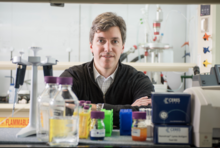 Ceres Nanosciences, a Northern Virginia bioscience company spun out of George Mason University that specializes in diagnostic products and workflows, has opened a 12,000-square-foot advanced particle manufacturing plant in Prince William County’s Innovation Park.
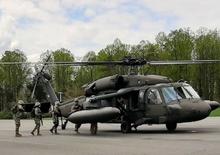 Mason cadets fly to Marine Corps Base Quantico to complete a simulated military mission.
- George Mason University is offering two COVID-19 vaccination clinics this week for students on Wednesday, April 21 and Friday, April 23.
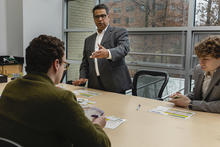 Nine Mason teams are participating in PitchFest, the TiE DC chapter’s region-wide pitch competition for university students.
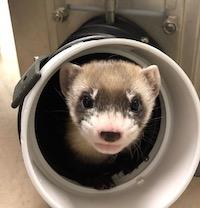 Black-footed ferrets were once thought to be extinct, until a small population was discovered in Wyoming in 1981. The species is still endangered, but scientists—including a George Mason University researcher and students at the Smithsonian-Mason School of Conservation (SMSC)—are coming to the rescue. In December 2020, Willa, a black-footed ferret who died in 1988, was cloned using her cells that had been frozen. That clone, Elizabeth Ann, is now the first North American endangered species to be cloned in the United States. Senior Research Scientist Klaus-Peter Koepfli conducted critical research on her genetic cell line.